BOXFEST XVII delivered a night of surprises and strong performances, highlighted by Montoya’s upset victory over Perez, alongside impressive showings from McTamney, Thompson, and Chada
By: George H. Hanson Jr., Esq.
Date: April 3, 2026
Venue: The Archer Music Hall – Allentown, Pennsylvania
Promoters: James Bartley—Red Owl Boxing
Matchmakers: James Bartley
Ring Announcer: Lupe Contreras
Referees: Eric Dali, Harvey Dock & Mary Glover
Ring Card Ladies: Alyssa & Amyah
Doctor: Tony Al Amin
Timekeeper: Ralph Nardone
Coverage: DAZN
Commentators: Marc Abrams & Danny “Swift” Garcia
Interviews: LeAnna Cruz
Gloves: “Put Up Your Dukes” brand – www.kdukesboxing.com
Photos: Darryl Cobb Jr.
My telephone interview with Lynne Carter, a respected boxing judge, for an upcoming feature article ran ten minutes longer than I had planned. As a result, I was late picking up Darryl Cobb, photographer, for our 65-mile drive to Allentown, Pennsylvania—a trip we were making for another thrilling evening of boxing. The event promised eleven action-packed bouts, with a total of sixty-eight scheduled rounds. The fight card featured seven four-round matches, two six-round contests, an eight-round co-main event, and the main event set for ten rounds.
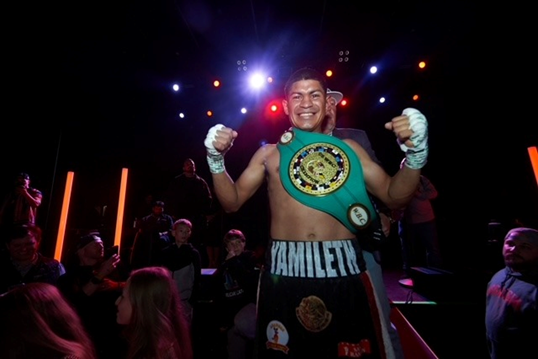
Although my interview ran longer than expected, I was able to meet up with Darryl Cobb at the corner of 57th and Market Street at 5:10 PM. Once together, we set off for Allentown, Pennsylvania, accompanied by Shaboozey’s third album, “Where I’ve Been, Isn’t Where I’m Going,” which played throughout our entire drive. Upon arrival, we found parking and made our way into the venue, just in time to witness the opening round of the night’s first bout. As is customary in my reporting, the specifics of that first match will be held for a later account. Instead, I will begin by covering the main event, then the co-main event, and afterward proceed through the rest of the fights in the order they occurred.
The evening turned out to be another electrifying night of boxing, showcasing a host of promising young fighters, several knockout finishes, and, inevitably, controversy. The eight-round co-main event was memorable, concluding with a decision that seemed like an early Christmas gift for the winner—a feeling shared by the audience, who voiced their disapproval with loud boos when the co-main event outcome was announced. This decision gave me reason to step onto my soapbox and advocate for improvements in boxing: better training for judges, mandatory drug testing, and perhaps even guide dogs for the officials! I sincerely hope the Pennsylvania State Athletic Commission will take these suggestions to heart. It remains troubling that so many spectators can witness the same contest and reach consensus, while the three judges at ringside seem to see something entirely different, as reflected in their scorecards.
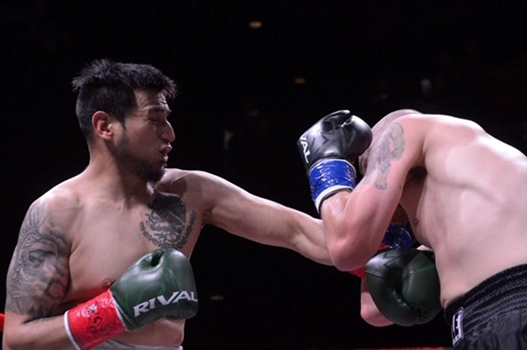
The highlight of the evening was the main event, which marked the ninth bout on the card. Undefeated 24-year-old lightweight Antonio “Bam Bam” Perez, hailing from Harrisburg, Pennsylvania, entered the ring with an impressive record of (11 wins – 0 losses – 0 draws – 5 kos). He faced off against the seasoned 31-year-old Abraham “Fily” Montoya from Baja California, Mexico, who brought a record of (23 wins – 7 losses – 1 draw – 14 kos). The two fighters competed for the vacant WBC USA Silver Lightweight Title.
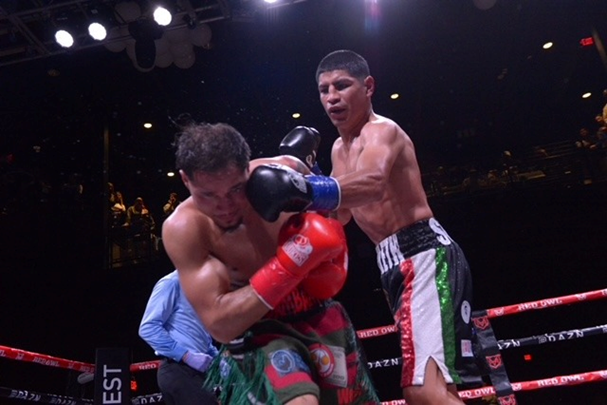
In a highly contested battle that spanned ten rounds, Perez suffered his first career defeat by split decision. The judges scored the bout 96-93 and 95-94 in favor of Montoya, while the dissenting judge saw it 95-94 for Perez. However, from my ringside perspective, I did not view the fight as particularly close, scoring the contest 98-91 for Montoya. The pivotal moment came in the final round when Montoya, already leading the round 10-9 on my scorecard, delivered a quick right hand that resulted in a flash knockdown, sending Perez to the canvas. This knockdown was significant under the 10-point Must System used in professional boxing. Because of the knockdown, Montoya was awarded an extra point, making the round 10-8 in his favor instead of the standard 10-9. If Montoya had been losing the round 10-9 before the knockdown, the knockdown would have leveled the score, making it a 10-10 round. The judges’ scorecards show the knockdown was pivotal in deciding the result. If Montoya had not scored the knockdown, the fight would have ended in a split draw, with the tallies reading 95-93 for Montoya, 94-94 as a draw, and 96-94 for Perez, following the established scoring logic and rules.
Montoya, perhaps motivated by the controversial outcome that befell his countryman Francisco Pedroza Portillo in the co-main event, entered the ring determined not to experience a similar fate. The opening round was a classic feeling-out period, with Perez using his jab effectively to keep Montoya at bay as the latter pressed forward. Montoya increased his activity in the second round and maintained consistent pressure from that point onward, forcing Perez to rely on shoulder-roll defense to avoid taking damage. The second round went to Montoya, while the third was closely contested, with both fighters exchanging blows on equal terms.
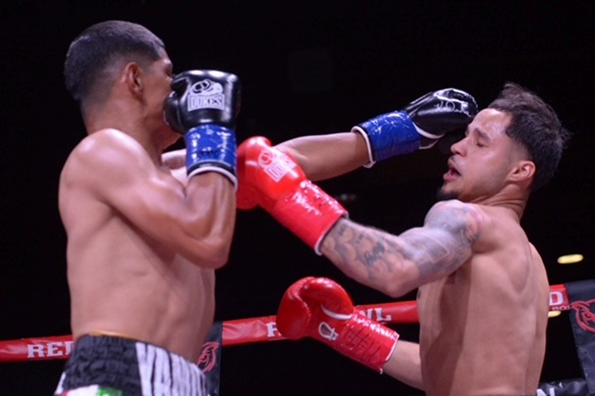
The fourth round lacked aesthetic appeal, but Montoya was the busier fighter, even dislodging Perez’s mouthpiece midway through, prompting referee Harvey Dock to have it replaced. Shortly thereafter, Montoya landed a punishing uppercut to Perez’s body. Sporting a confident smile, Montoya continued to advance, reminiscent of Alexis Arguello’s style, walking his opponent down and landing shots to both the head and body. It became clear that Perez was struggling to find an answer for Montoya’s relentless approach and was visibly uncomfortable as Montoya pressed forward with determination.
Montoya inflicted further damage early in the ninth round, hurting Perez with a straight right. Despite the setback, Perez demonstrated resilience, recovering and fighting back. At the round’s conclusion, Montoya, pleased with his performance, raised his hands in celebration as he returned to his corner. In the tenth and final round, Montoya again staggered Perez with a straight right, forcing Perez to hold on. The pace remained brisk, and Montoya with a grazing blow managed to force an off-balance Perez to have his gloves touch the canvas. Referee Dock began the count, dusting Perez’s gloves, and the fight continued until the final bell.
Had the knockdown in the last round not taken place, the bout would have ended as a majority draw. This pivotal moment shifted the outcome in Montoya’s favor, highlighting the critical impact of the 10-point Must System scoring in professional boxing. Notably, one judge scored the fight for Perez, creating a sense that he had viewed an entirely different contest, as Montoya’s performance throughout the match appeared clearly superior. Despite the split decision reflected on the official scorecards, it was evident that Montoya deserved the victory based on his ring dominance and consistent pressure.
This outcome was an impressive triumph for Montoya, showcasing his experience and resilience against a younger opponent. For Perez, the defeat offers an important lesson; facing a veteran with three times his ring experience proved to be a formidable challenge. The experience gained from this bout can serve Perez well as he moves forward in his boxing career. Additionally, it is crucial for Perez’s team to recognize that fighting only twice in the past two years may not be ideal for maintaining peak performance. Regular activity and experience in the ring are essential for a fighter to stay sharp and competitive. Perez has demonstrated remarkable skills and promise throughout his boxing career. Despite the outcome of this bout, which marked his first professional loss, it should be viewed as an invaluable learning experience rather than a defeat that defines his trajectory. His talent and potential remain evident, and this moment stands as an opportunity for growth and development as he continues to advance.
The co-main event of the evening was marred by controversy, leaving many spectators stunned by what they believed was an unjust outcome. I attended the fights expecting to witness boxing performed at its highest level. However, instead of skill and fair play, this fight was reminiscent of an old Western—there were no Jesse James and the Younger Gang robbing banks tonight, but it felt as though a fighter was robbed in the ring. The scheduled eight-round bantamweight bout featured Emanuel “El Trompo” Moreno, who entered the ring (12 wins – 0 losses – 0 draws – 3 kos) Wichita Falls, Texas. His opponent, Francisco Pedroza Portillo from Baja California, Mexico, boasted a record of (20 wins – 14 losses – 2 draws – 11 kos) and is the man who defeated Rau’shee Warren, former WBA & IBO World Bantamweight Champion in his final bout.
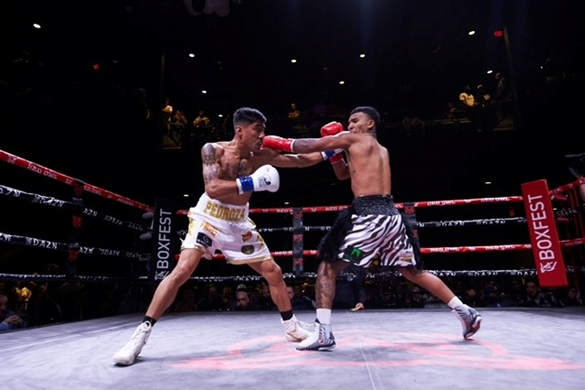
In a contest that demanded close attention and fair judgment, Moreno was ultimately awarded a unanimous decision victory. The official scorecards read 78-73, 77-74, and 76-75 in favor of Moreno. From my perspective at ringside, I saw the fight differently and scored the bout 78-73 for Portillo. When the decision was announced, the crowd’s reaction spoke volumes. A cacophony of boos reverberated throughout the building, underscoring the widespread disappointment and disbelief among fans. The outcome of this bout left me questioning the integrity of the judging and the need for reform in the sport.
In the opening round, twenty-one-year-old Emanuel Moreno demonstrated effective use of his jab and lateral movement, allowing him to land more punches than the advancing Francisco Pedroza Portillo. Moreno’s early strategy gave him the edge, as he kept Portillo at bay and scored consistently. The momentum shifted in the second round, with Portillo taking control by working behind his own jab. He not only threw and landed more punches but also pressed the action, maintaining relentless pressure on Moreno. From this point onward, Portillo never eased up, consistently pushing forward and dictating the pace for the remainder of the fight. Throughout the third, fourth, and eighth rounds, Portillo received warnings for hitting Moreno behind the head. These infractions occurred during exchanges, and Moreno often leaned into the punches, resulting in inadvertent grazes rather than significant damage. Despite this, referee Dali deducted a point from Portillo in the eighth round for an alleged infraction. Interestingly, Portillo still managed to win that round on my scorecard, leading to a 9-9 score for the eighth.
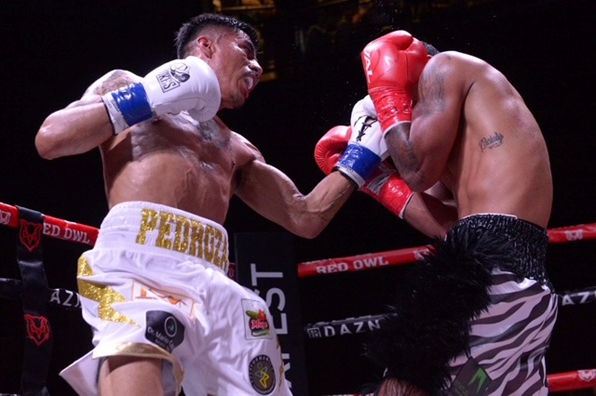
The rounds themselves were nearly identical in nature. Portillo remained the busier fighter, consistently landing his jab to both the head and body and occasionally connecting with a straight right. Moreno responded and fought back throughout, but he was ultimately out landed by Portillo’s volume and accuracy. The bout featured no knockdowns, nor did either fighter appear in serious trouble. Instead, it was a straightforward contest in which one fighter marched forward, outworking his opponent.
In my view, Portillo won the fight, though the judges failed to award him the decision.
Although the outcome may have seemed like an unexpected gift for Moreno, it is important to recognize his talent and potential within the sport. This experience offers Moreno a valuable opportunity to reflect on the bout and use it as a learning tool for his continued development. By analyzing what transpired in the ring, Moreno can gain crucial insights that will serve him well in future contests. His performance in this eight-round encounter with a highly experienced opponent has undoubtedly contributed to his growth as a fighter. Moreno faced a rival with triple his ring experience, pushing him to improve and gain valuable lessons only found in real matches. As a result, he emerges from the contest as a more skilled and seasoned boxer, better prepared for the challenges that lie ahead in his professional career.
The evening began with a four-round junior-middleweight matchup featuring thirty-year-old Brooke “Too Smooth” Mullen (1 win – 0 losses – 0 draws – 1 ko), representing Boyertown, Pennsylvania and fighting out of Philadelphia. Her opponent, twenty-year-old southpaw Breona Vaughn of Las Vegas, Nevada, arrived with a record of (0 wins – 2 losses – 0 draw). Mullen, a 2017 graduate of West Chester University where she played varsity basketball, was guided in her corner by renowned trainer Derek “Bozy” Ennis, who provided vocal instructions throughout the contest.
Right from the opening bell, Mullen advanced aggressively, utilizing her jab and launching hooks to both the head and body with clear intent. She dictated the pace, pressing the action as Vaughn retreated and attempted to mount a response. Mullen’s assertiveness and control enabled her to secure the first round on my scorecard.
Maintaining her intensity into the second round, Mullen overwhelmed her southpaw opponent, who struggled to keep up but remained competitive. Mullen demonstrated superior accuracy and punching power, targeting Vaughn’s ribcage and midsection with precision and force, causing visible discomfort with every blow. The third round mirrored the previous one, reinforcing the sense that the bout would not last the full distance.
Mullen started the fourth round by attacking the body, hurting Vaughn and eventually trapping her in a corner. She unleashed a relentless barrage with both hands, alternating body shots with hooks and straight rights to the head. Referee Dali intervened at fifty-four seconds into the round, stopping the contest to prevent further harm to Vaughn. Mullen was awarded the victory by technical knockout, capping an impressive performance. Brooke Mullen demonstrated her potential in this bout, showcasing combination punching, effective body work, and significant punching power.
On March 7th, at the Alan Horowitz Sixth Man Center, twenty-two-year-old Cahir “The Gael” Gormley of Derry, Ireland, a two-time Irish National Amateur champion, fighting out of Scranton, Pennsylvania, made his highly anticipated professional debut. Tonight, Gormley entered the ring with a professional record of (1 win – 0 losses – 0 draws – 0 kos). His opponent, twenty-eight-year-old Dominicque “Archangel” McBride from Dallas, Texas, came into the four-round junior-middleweight contest with a record of (0 wins – 2 losses – 0 draws). From the opening bell, Gormley asserted his dominance, pressing the action, relentlessly stalking the shorter McBride around the ring. Utilizing an effective jab, he set up powerful left hooks and straight rights, keeping McBride on the defensive.
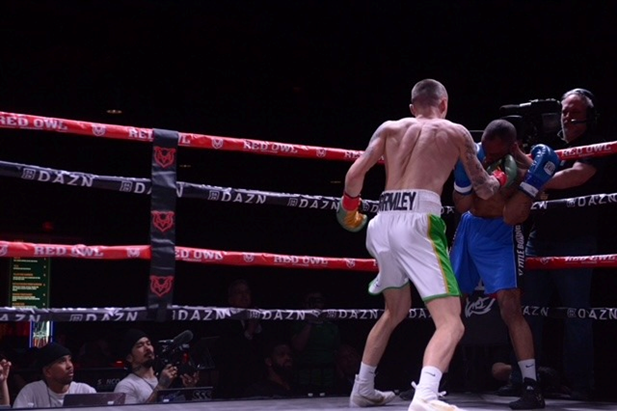
Despite McBride’s attempts to keep his distance by circling on the outside and using his jab, Gormley broke through with a straight right hand that buckled McBride’s legs and sent him reeling into the ropes. Sensing an opportunity to finish the fight, Gormley unleashed a barrage of punches, overwhelming McBride with his aggression. Referee Glover quickly intervened to prevent further damage, stopping the contest at 2:04 of the opening round. The referee’s decision awarded Gormley a technical knockout victory in an impressive display for his second professional fight.
The third bout – scheduled for six rounds, twenty-year-old Philadelphia featherweight Dennis “Quiet Storm” Thompson entered the ring with an undefeated record (9 wins – 0 losses – 0 draws – 6 kos). Facing him was the seasoned thirty-seven-year-old Diuhl “Elegante” Olquin of Oak Hills, California, a veteran of 73 fights with a record of (18 wins – 48 losses – 7 draws – 10 kos). From the opening bell, Thompson established control, utilizing his jab to land consistently to both the body and head. He systematically dismantled Olquin round after round, never allowing the veteran to escape punching range. Thompson’s relentless approach kept him on the front foot, shadowing his opponent and limiting Olquin’s opportunities to mount any significant offense.
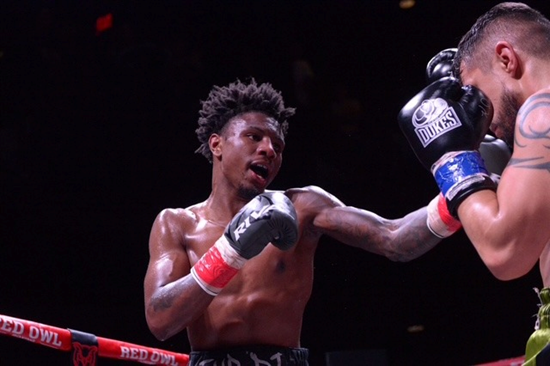
The fight was a clinic in textbook boxing, as Thompson executed the instructions from his corner with precision, staying one step ahead of Olquin throughout all six rounds. Despite Olquin’s experience, neither fighter was knocked down nor found themselves in serious trouble during the bout. Thompson’s dominant performance was reflected in the scorecards: he won a six-round unanimous decision, 60-54 on all cards. This contest served as a valuable learning experience for Thompson. By going six competitive rounds with a savvy veteran who has seen nearly everything in the sport, Thompson emerged as an even better boxer, demonstrating mastery of the sweet science and marking another milestone in his promising career.
In the fourth bout of the evening, twenty-three-year-old southpaw welterweight Adrian Salazar of Tyler, Texas made his professional debut against thirty-three-year-old Cory Grant (0 wins – 1 loss – 2 draws) from Meza, Arizona. Grant, standing 6 feet tall, held a four-inch height advantage over Salazar and attempted to confuse his opponent by switching between orthodox and southpaw stances throughout the contest.
Despite Grant’s efforts to disguise his intentions, Salazar remained unfazed and pressed the action from the opening bell. He consistently advanced, landing jabs to both the head and body. Salazar’s proficiency was evident as he worked Grant’s body and head round after round, demonstrating an effective and relentless approach.
Positioned near Cory Grant’s corner during the bout, I overheard a succession of clichéd instructions from Grant’s handlers. These directions, such as “keep staying relaxed and loose,” appeared disconnected from the reality in the ring, especially as Adrian Salazar maintained an aggressive pace, focusing his attacks on Grant’s body.
The confusion in Grant’s corner continued into the fourth round, highlighted by the shout, “You playing pool with a short stick!”—an apparent suggestion that Grant should use his jab to box from a distance. Despite these efforts, the advice proved ineffective, as Salazar consistently outboxed and out-landed Grant throughout all four rounds. With approximately ten seconds remaining before the final bell, Salazar landed a powerful overhand left that struck Grant’s head and sent him to the canvas. Grant managed to rise as referee Dali counted to three, and the bout concluded shortly thereafter. When the judges announced their scores, all three delivered identical scorecards of 40-35 in favor of Salazar. His professional debut demonstrated his dominance and adaptability in the ring, earning him a unanimous decision victory and marking an impressive start to his career.
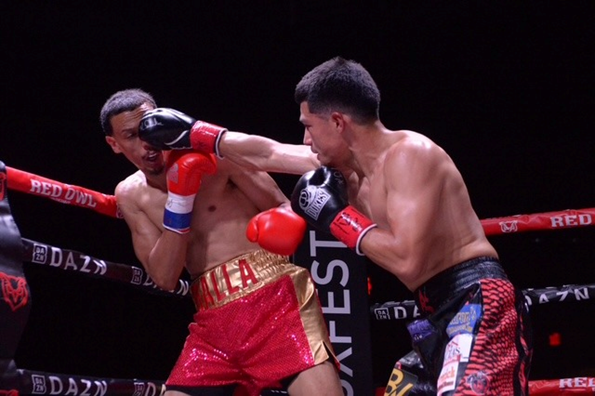
The fifth fight of the evening featured a four-round bantamweight contest between nineteen-year-old “Poison” Ivy Enriquez of El Paso, Texas, and thirty-three-year-old Chasity Roberts from Jacksonville, North Carolina. Enriquez entered the bout with an unblemished record of (6 wins – 0 losses – 0 draws – 2 kos) while Roberts came in with (1 win – 0 losses – 0 draws – 0 kos). From the opening bell, Enriquez demonstrated her aggressive style by landing powerful shots to both the body and head. Despite Enriquez’s early dominance, Roberts showed resilience, refusing to back down and firing back with hard body shots of her own. Though Roberts fought valiantly, Enriquez maintained the upper hand throughout the first round.
.
The second round followed a similar pattern, with Enriquez advancing and Roberts staying mobile, continuing to fight back. Enriquez’s pressure remained constant as she pushed forward, while Roberts attempted to counter. In the third round, Enriquez continued her forward march. Meanwhile, Roberts’ corner could be heard shouting “Change levels!”—a phrase often used by trainers to sound knowledgeable, though it seemed disconnected from the actual dynamics in the ring. I noticed that Enriquez was left wide open for a right uppercut up the middle, a punch that was neither suggested by Roberts’ team nor attempted by Roberts herself.
In the final round, Roberts’ corner adjusted their advice, urging her to “Find the uppercut!” Despite this, Enriquez remained the busier fighter, consistently outworking her opponent until the last bell. When the scores were announced, all three judges delivered identical cards of 40-36 in favor of Enriquez, awarding her the unanimous decision victory, referee Glover raising her hand in victory. The result was no surprise, as Enriquez’s active approach and consistent output secured her a well-earned win.
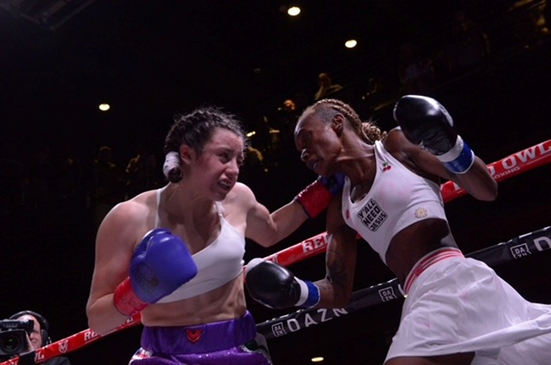
Debuting twenty-one-year-old featherweight Eric “Pretty Boy” Martinez of Reading, Pennsylvania, proved to be an anomaly in his division. Standing at 5 feet 11 inches, Martinez is exceptionally tall for a featherweight and fights as a southpaw. In the sixth bout of the evening—a scheduled four-round contest—Martinez faced fellow debutant Chris Karagiannis, a twenty-three-year-old from Saint Louis, Missouri, who stands at 5 feet 6 inches. Martinez enjoyed strong support from his fans, who cheered enthusiastically as Lupe Contreras announced his name.
As the opening bell sounded, Karagiannis moved forward, attempting to smother his taller opponent. Martinez responded with several well-placed uppercuts, prompting Karagiannis to briefly alter his strategy and retreat. Karagiannis, however, quickly regained his composure and resumed his aggressive approach, continuing to pressure Martinez. The momentum carried into the second round, where Martinez again found success with uppercuts, visibly hurting his opponent and raising questions about whether Karagiannis would be able to continue into the third round.
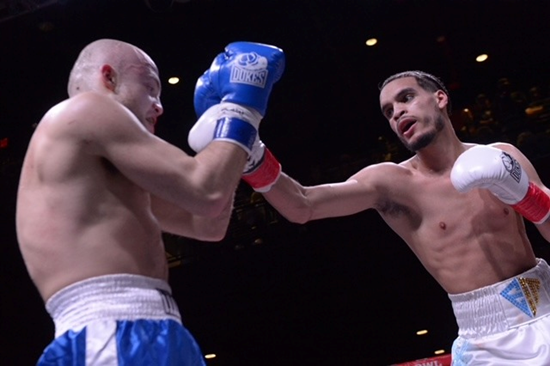
The third round saw a revitalized Karagiannis pressing forward with renewed aggression. Despite this, Martinez maintained the upper hand during their close exchanges. During a crucial exchange, Martinez executed a precise left uppercut to Karagiannis’s solar plexus, resulting in Karagiannis falling to the canvas and displaying signs of discomfort. Karagiannis managed to get upright as referee Dock reached the count of six and began to assess his condition. However, before Dock could make a final decision, Karagiannis’s corner signaled to stop the fight. As a result, Martinez was declared the winner by technical knockout at 1:55 of round three.
I attended Cornellio “Chada Time” Phipps’ third professional bout, which took place on May 25, 2024, at the Greater Newark Boys and Girls Club in Newark, New Jersey. Strict Biz Promotions promoted the event. In that fight—a scheduled six-rounder—Phipps faced Robin Ellis, whose record stood at (6 wins – 4 losses – 0 draws – 5 kos). Phipps delivered an impressive performance by stopping Ellis in the opening round. Having witnessed his rapid victory and growth as a fighter, I was eager to observe Phipps’ development in his latest appearance.
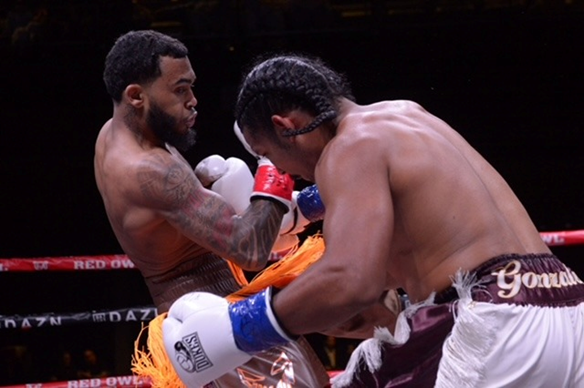
Tonight, Phipps competed in a six-round featherweight bout against twenty-nine-year-old Frank Gonzalez of Hialeah, Florida. Gonzalez entered the ring with a record of (12 wins – 9 losses – 0 draws – 6 kos). Phipps’ performance in this fight reinforced his status as an impressive and skilled competitor at the featherweight limit. The twenty-year-old Cornellio Phipps delivered a commanding performance against Frank Gonzalez, controlling the action from the opening bell to the final round. Phipps consistently outboxed his opponent, leaving no uncertainty about the result, and earned a unanimous decision victory with scores of 60-53 on all three judges’ cards.
As soon as the fight began, Gonzalez aggressively moved toward Phipps, but Phipps quickly answered with a powerful left hook, followed by an overhand right. For about thirty seconds, Phipps intensified his attack, forcing Gonzalez’s mouthpiece to be dislodged. This moment prompted referee Glover to pause the match so Gonzalez’s corner could replace the mouthpiece. Once the action resumed, Phipps continued to demonstrate his superiority, decisively winning the opening round.
Phipps maintained his dominance throughout the subsequent rounds. His complete skill set was evident, showcasing tactics and techniques honed through dedicated training. In the third round, Gonzalez was hurt by an uppercut and soon lost his mouthpiece for a second time. This recurring infraction led the referee to deduct a point from Gonzalez. Despite this penalty, Gonzalez’s mouthpiece again hit the canvas twice more—in the fourth and final rounds, though the referee chose not to impose further penalties.
Phipps continued to box intelligently, causing Gonzalez to buckle in the fifth round. In the last round, referee Glover halted the action briefly for Dr. Tony Al Amin to examine Gonzalez, whose left eye was bleeding. After determining that Gonzalez could continue, the fight resumed, but Gonzalez’s mouthpiece was once again dislodged. The bout concluded with another impressive display by Phipps, solidifying his victory and leaving hope that he will compete more frequently in the future.
Jaclyne “The Assassin” McTamney, a Registered Nurse and graduate of Lasalle University, is quickly making her mark in the featherweight division. Fighting out of Philadelphia and hailing from Southhampton, Pennsylvania, McTamney boasts an impressive record of (3 wins – 0 losses – 0 draws – 1 ko). Her mission is clear: she is determined to become a World Champion. Loved and respected throughout the Philadelphia boxing community, McTamney’s rapid development has garnered support and belief that she will achieve her ambitious goal. Her journey took another positive step tonight, as she secured a unanimous decision victory, winning 40-36 on all scorecards against Lauren Michaels (2 wins – 7 losses – 0 draws – 0 kos) from Holidaysburg, Pennsylvania.
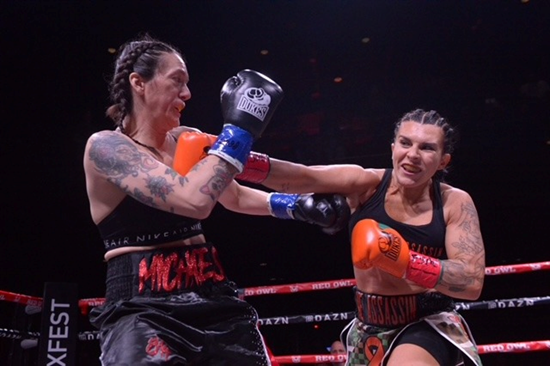
With trainer Mark Robertson guiding her corner, McTamney wasted no time at the opening bell. She pressed the action, utilizing a strong jab and landing her overhand right. Her relentless movement and combination punching forced Michaels to rise to the challenge and attempt to match her intensity. Over four action-packed rounds, McTamney showcased her skills by controlling the pace, outworking, and outclassing an opponent who showed determination and grit. This bout marked McTamney’s fourth fight since turning professional on September 15, 2023. However, her climb towards title contention has been slowed by periods of inactivity—four fights in two and a half years is a gradual pace for a rising contender. With her talent and a story fit for Hollywood, there is hope that McTamney will become more active and ultimately capture a World Title soon.
In the eleventh and final bout of the evening, featuring southpaws, middleweight Gustavo “The Assassin” Morales (3 wins – 0 losses – 0 draws – 2 kos) from Allentown secured a technical knockout at 1:27 of round two against debuting Chevy Bridges of Durant, Oklahoma, who was transitioning from bareknuckle boxing to gloved competition. The first round featured both fighters employing jabs and targeting the body in a closely contested exchange. In the second round, Morales cornered Bridges and delivered a sustained offensive barrage for approximately twenty seconds, prompting referee Dali to consider stopping the action. Despite briefly escaping the corner, Bridges was subsequently knocked down by a decisive combination from Morales. After rising to the count of eight, the referee determined it prudently to halt the match to prevent further injury, thus awarding Morales the victory. Morales’s performance was consistent with his reputation, earning enthusiastic support from the local audience.
The atmosphere at the Pennsylvania boxing event was electric, further underscoring the region’s reputation for thrilling fight nights. At the center of this excitement is Red Owl Boxing, a company founded by Gabriel Fanous, whose vision and dedication have shaped its mission. Fanous, serving as both Founder and CEO, established Red Owl Boxing with a deep passion for the sport and a steadfast commitment to its development. Fanous plans to develop an Owl’s Nest facility, a modern arena in Philadelphia, modeled after the successful venue established in Houston.
There is hope that this ambitious project will come to fruition in 2026, further cementing Philadelphia’s status as “The Capital of Boxing.” The city’s rich heritage in the sport is renowned, boasting more professional boxers than Jamaica has reggae artists, a testament to the enduring boxing culture that thrives in Philadelphia.
Someone pour me up a double shot of whiskey
They know me and Jack Daniel’s got a history
There’s a party downtown near 5th Street (come on)
Everybody at the bar getting tipsy (whoo-ooh) (“A Bar Song – Tipsy” – Shaboozey)
Continue to support the sweet science, and remember, always carry your mouthpiece!
ghanson18@icloud.com