By George Hanson Jr., Esq.
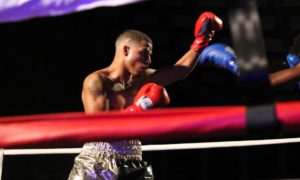
On the morning of June 9, 2026, I picked up the phone to call super middleweight contender Derrick “Take It to The Bank” Webster in Glassboro, New Jersey, and wish him a happy forty fourth birthday. The number felt surreal. Time had slipped by faster than any of us realized. I’d been watching Webster since his brief but electric amateur run — 10 wins, 2 losses, every victory a knockout — including two unforgettable clashes with National Golden Gloves champion and cross town rival Jesse “Hollywood” Hart. I was there the night Webster dropped Hart with a clean shot, the crowd erupting as Hart hit the canvas. Hollywood recovered, lived up to his name, and edged the decision, but the moment told me everything I needed to know about Webster.
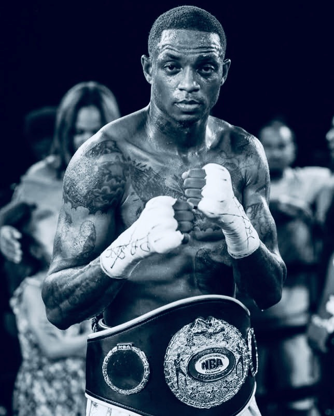
At 6-foot 4 with the kind of fluid athleticism you can’t teach, Webster reminded me of a modernized Tommy “The Hitman” Hearns — only from the southpaw stance. And like my hero Muhammad Ali, he carried a natural charisma, a quick wit, and that rare ability to say the right thing at the right time while keeping everyone entertained. In every sense of the phrase, he had it all. Watching him tear through the amateur ranks, I was certain he’d become a world champion as I once was that Usain Bolt would rewrite the record books.
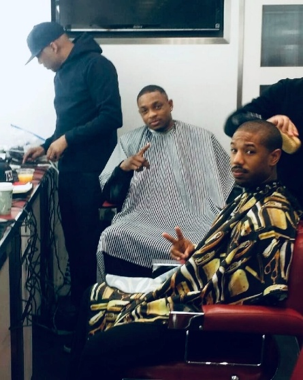
Then Hollywood called – but not Jesse Hart. Sylvester Stallone. When the Creed production team came to Philadelphia in 2015, trainer and cutman Danny Davis told Webster the directors wanted him to audition. He walked in, read for the part, and walked out as Kevin “The Bank” Grier, the light heavyweight sparring partner for Adonis Creed, played by Michael B. Jordan. Three days later, he was on the phone with Stallone himself. The role had originally been written for a right handed fighter, but Webster — a natural southpaw — helped the crew rework the choreography to match his style. Even in Hollywood, he brought authenticity to the ring.
Before boxing ever entered his life, Webster imagined a different future. A 2005 graduate of the University of Maryland with a degree in criminal justice, he spent his college years as a lanky, high flying shooting guard — first at Salem Community College after leaving Glassboro High School in 2001, then in College Park. Basketball was his first love, the sport that shaped his discipline and footwork long before he ever wrapped his hands.
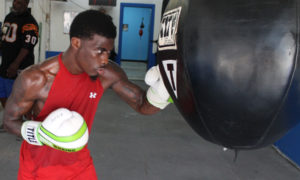
But fate has a way of redirecting even the most promising plans. In 2006, Webster followed his cousin, heavyweight Chazz Witherspoon, into the Joe Hand Boxing Gym in Philadelphia — a place where dreams are either sharpened or shattered. The moment trainers Wade and Randy Hinnant watched him unload on the heavy bag, they saw something rare: natural rhythm, natural power, natural presence. God given talent, they called it. And Webster, hungry for a new challenge, embraced the grind.
Over the next three years, he learned the sport the hard way — by trading leather with some of Philadelphia’s finest. Joey “The Tank” Dawejko, Mike Jones, Lajuan Simon, Latif Mundy, Terrance Cauthen, Steve “USS” Cunningham, Khalib “Big Foot” Whitmore — the list reads like a roll call of Philly’s toughest. It was during one of those sessions, while Webster was sparring Dawejko, that Wade shouted the words that would become his identity: “Take it to the bank!” The nickname stuck instantly. Everyone in the gym believed Webster’s talent would one day cash out in a big way.
I watched his professional debut from press row on May 8, 2009, just weeks before his twenty seventh birthday. Under the guidance of Ivan “Mighty” Robinson — the man who twice defeated Arturo “Thunder” Gatti — Webster outboxed fellow debutant Vince “Bad News” Burkhalter, surviving a surprise knockdown in the third round before rallying to win a split decision. It was a baptism by fire, the kind that reveals a fighter’s character. After one more bout and a quiet disagreement behind the scenes, Webster moved on to Camden trainer Denny Brown, who would remain in his corner for the rest of his career.
With his younger brother and biggest supporter, Larry Fussell, at ringside and D&D Management (Dave Price and Doc Nowicki) guiding his career, Webster won 19 straight fights, including 10 by knockout, before suffering his first professional loss on July 17, 2016: a 10-round decision to undefeated Russian prospect Arif Magomedov. He likely should not have taken the bout, as he was forced down to the middleweight limit, eight pounds below his natural class. Even so, he bounced back 11 months later with a unanimous decision over veteran Lenwood Dozier, beginning another 10-fight winning streak that lasted until 2019, when he lost a decision to the unbeaten Lennox Allen.
Along the way, Webster became one of the most trusted sparring partners in the sport. He helped Bernard “The Executioner” Hopkins prepare for his first defense of the WBC light heavyweight title against Chad Dawson. He worked with Andre Ward before Ward dethroned Dawson in 2012. He sharpened the skills of Julio César Chávez Jr., Sergey Kovalev, Eleider Álvarez, and Matt Korobov. In gyms from Philadelphia to California, Webster’s name carried weight.
Born in Raleigh, West Virginia, on June 9, 1982, Webster moved to Glassboro at age six with his mother. He never met his father, Derrick Webster Sr., a professional artist, except through phone calls. “The first time I met my father, he was in a casket,” he once told me. His father had been murdered in 2002 by a racist who beat him and threw him into the Elk River — a crime that resulted in a shockingly light three year sentence. In a twist of fate, that same man was killed in 2010, and the shooter was acquitted on grounds of self defense. The story shaped Webster’s worldview, his resilience, and his refusal to be defined by tragedy.
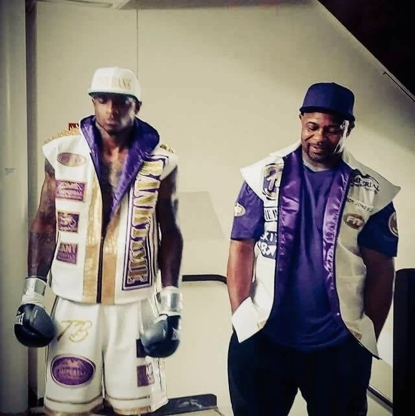
Four – division World Champion, Roy Jones Jr. became his North Star. Webster admired Jones’s brilliance — the talent, the showmanship, the swagger. When they met at the Pacquiao Bradley III fight in 2016, Jones mistook Webster for a basketball player. They exchanged numbers, and a decade long friendship followed. Jones became a mentor, a strategist, a voice of reason in Webster’s corner. “Roy is never too busy to take my call,” Webster says.
But boxing was never his only pursuit. Before turning pro, Webster founded TDX Remodeling & Design LLC, a full-service construction company that began with residential work and later expanded into commercial projects, now operating in all fifty states. He also launched Hardline Legacy Production, a film company preparing to release Pushback, a gritty story inspired by life on the street. Its companion series, Concrete, is already being pitched to major networks, and five more scripts are waiting in the wings.
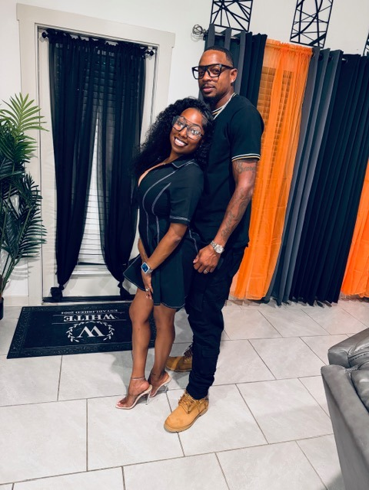
Though he hasn’t fought since March 2024, Webster hasn’t officially retired. He wants one more win — one final moment under the lights. Whether his fiancée, Latrivia Edwards, will sign off on that is another story. Webster is a devoted family man, father to seven children ranging from eight to twenty five, and brother to Kristen and Larry, with whom he speaks daily. With a wedding on the horizon, it’s hard to imagine his loved ones encouraging another night in the trenches.
Boxing was never Webster’s original dream. As he puts it, “It saved me from the streets. With every win, I knew I was a champion.” In the end, his story is defined less by the titles he pursued than by the resilience that carried him through every round of life. He fought with his fists, built with his hands, and spoke with a conviction that inspired belief. Whether he ever steps into the ring again is almost beside the point.
Webster has already proven that greatness isn’t measured only in titles — sometimes it’s measured in the lives you touch, the battles you survive, and the legacy you build long after the final bell.
Continue to support the sweet science, and remember, always carry your mouthpiece.
ghanson18@icloud.com